
repairing for resilience
As someone who restores loved luxury bags, I often notice that damage doesn’t begin with dramatic accidents, but from every day life.
A sudden rain showers.
A leaking water bottle
A coffee spill.
A bag placed on a wet Café chair.
These ordinary moments slowly shake the life of an objets. While luxury bags are designed with exceptional craftsmanship and beautiful materials, many remain vulnerable to the reality of daily use.
This question became particularly clear during a recent trip to Copenhagen. I was carrying one of my restored Hermès bags when an unexpected rain shower arrived. I wasn’t bothered by the rain myself, but really started to concern about protecting the bag from the rain. An idea hit me,“I can’t be the only one bothered.” Perhaps restoration should do more than repairing the damage. Would it be cool if I could make it more resilient towards future damages? Yes, that’s it.
Resilience.
Surprisingly (not really) I came across Loro Piana’s Rain System® cashmere. The cashmere remains recognizably cashmere while gaining the waterproof functionality - soft, refined but resistant to changing weather conditions.
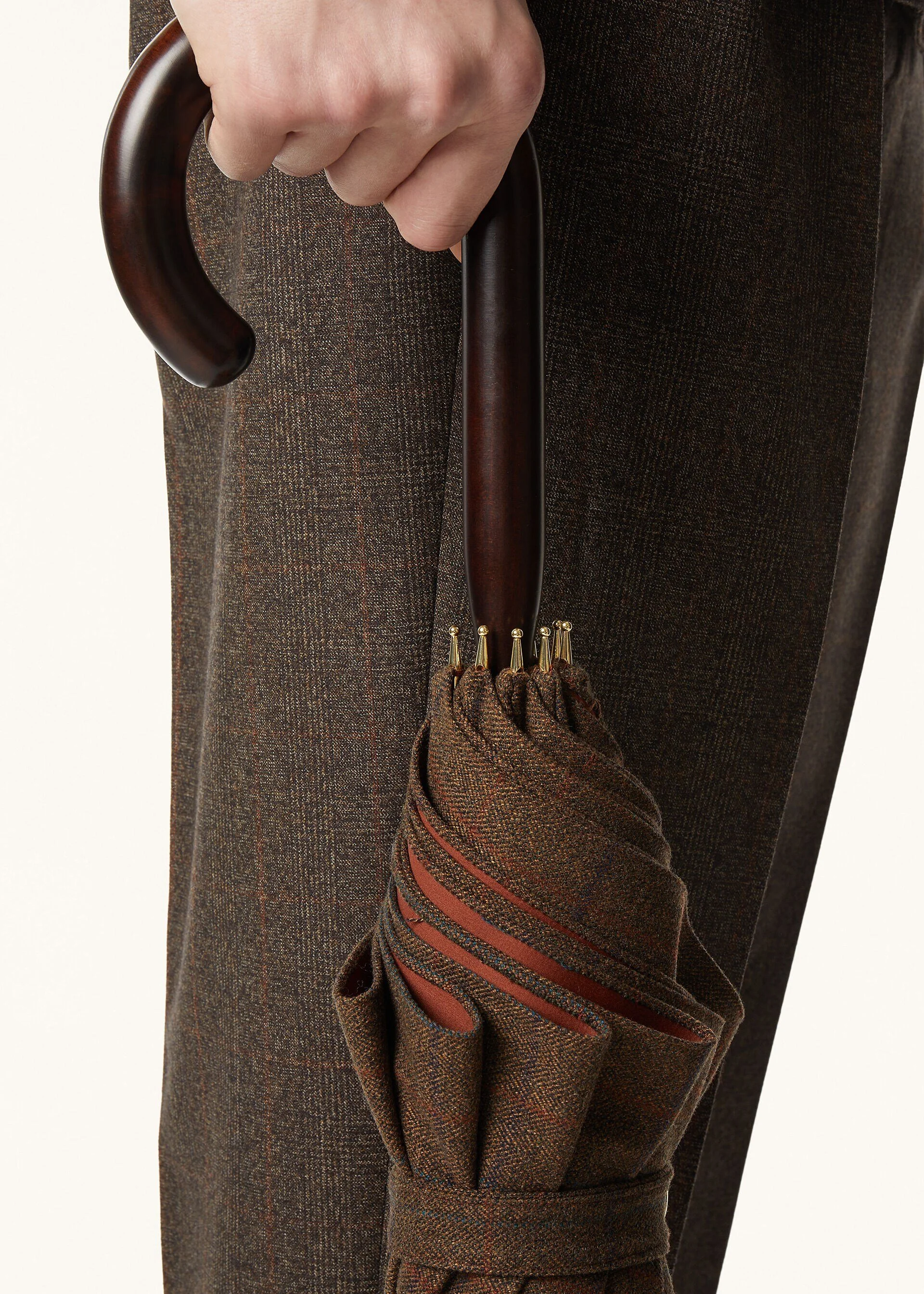
Lora Piana’s umbrella crafted with a smooth maple-wood handle and a water-repellent canopy.
I found it fascinating.
What if I restore a Hermès Garden Party with a weather-resistant textile? Could decorative lace become water repellent without losing its aesthetic? Maybe material innovation is another form of object care?
Experiment: Weather Protection
Research question
What does it mean to repair/redesign a luxury object not only for aesthetic, but for resilience?
Copenhagen's constantly changing weather has made me think about something that is strangely absent from much of luxury - bag culture: weather protection.
A luxury bag can cost thousands, yet rain protection is rarely treated as part of its material ecosystem. We protect the object through repair after damage, but what if we also designed for protection before damage occurs?
Two directions
01. Material Transformation
Investigate waterproof or water-resistant luxury textiles, including waterproof cashmere and other technically treated materials, as a potential surface intervention.
The question isn't simply “Can this material resist rain?” It is:
Can a protective material become part of the language of luxury rather than an external technical solution?
02. Protective Layer
Study an original vintage Hermès bag raincoat/rain cover that I sourced as a design reference.
The project will look at its construction, proportions, relationship to the bag, and the idea of a detachable protective layer, then ask:
What would this object look like if we redesigned it today?
Not necessarily replicating the original object, but using it as evidence.
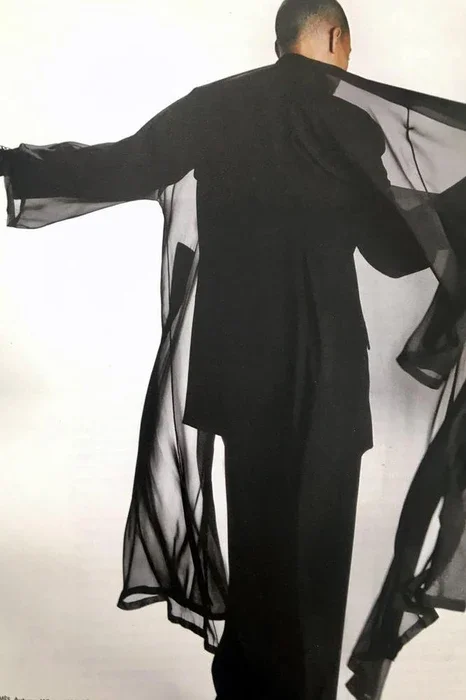
Hermès coat by Martin Margiela, Fall winter collection 1998/1999 "rainproof" model in water-repellent polyester voile, inspired by the cut of the kimono.
Cultural Reference: Martin Margiela at Hermès
Martin Margiela's period at Hermès is an important reference for this experiment. His approach was not simply to introduce new aesthetics into an established luxury house, but to question what luxury could be through material, function and everyday use.
I am particularly fascinated by his exploration of weather-resistant garments, including the transparent vinyl pieces designed to protect against rain. The idea of taking a material associated with utility and bringing it into the language of luxury feels especially relevant to Repair for Resilience.
Rather than treating protection as something external or purely functional, Margiela made it part of the design itself. This opens up a question for my own practice: what happens when protection becomes a designed luxury object in its own right?
Final thought
We have spent decades making outdoor clothing lighter, stronger and more weather resistant. Yet most luxury handbags, especially those made from canvas, suede, heavy embroidery, or delicate leather or textile, remain vulnerable to the everyday life conditions.
These questions are the beginning of my growing material research that investigate textiles and surface intervention capable of extending the everyday life of luxury objects, as well as preserving the their original visual language. From waterproof cashmere to hydrophobic lace and protective surface treatment, I want to study how material innovation and intervention can become part of the Object Care.