
Innovation through repair
When people think about repair, they often think about craftsmanship.
A skilled artisan recolors faded leather, re-stitches torn seams or replaces worn parts. The goal is usually to make the object look as close to new as possible.
I deeply respect those skills. Traditional craftsmanship is an essential part of my restoration practice. But I believe something is still missing:
Design Thinking.
When a damaged object arrives in my studio, I don’t begin by asking,”How do I fix this?” I ask, “If I were designing this object today, how would I solve this problem?”
Last year, I encountered a woven Ferragamo bag with a broken wooden buckle, where the original component was unfortunately no longer available. I treated the broken buckle as a product design brief.
I measured the original component, drew a new version and collaborated with a product design student from Berlin University of the Arts (UdK), and together we recreated the buckle through 3D printing.
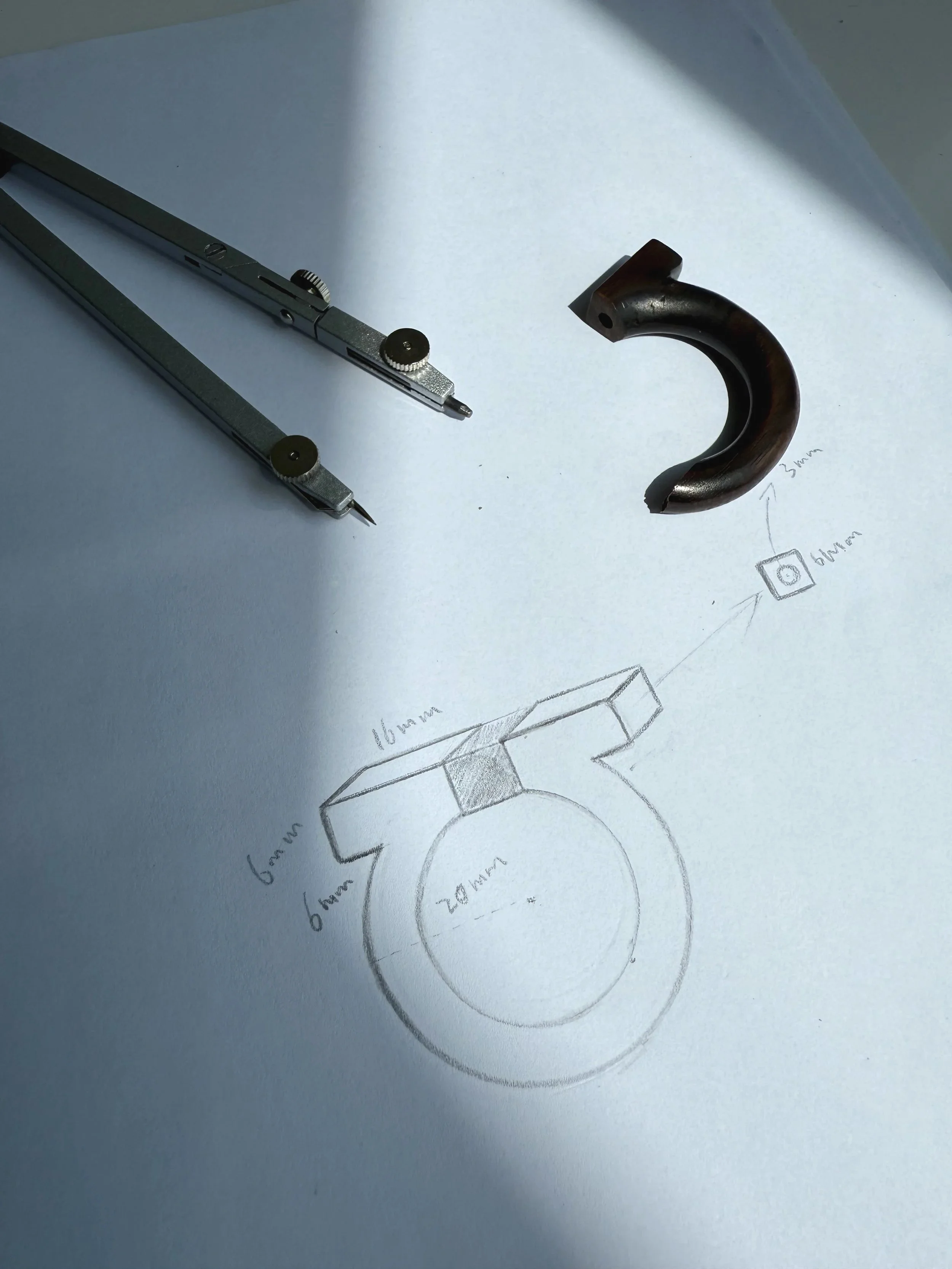
Redefining the problem.
The original broken buckle became a design brief
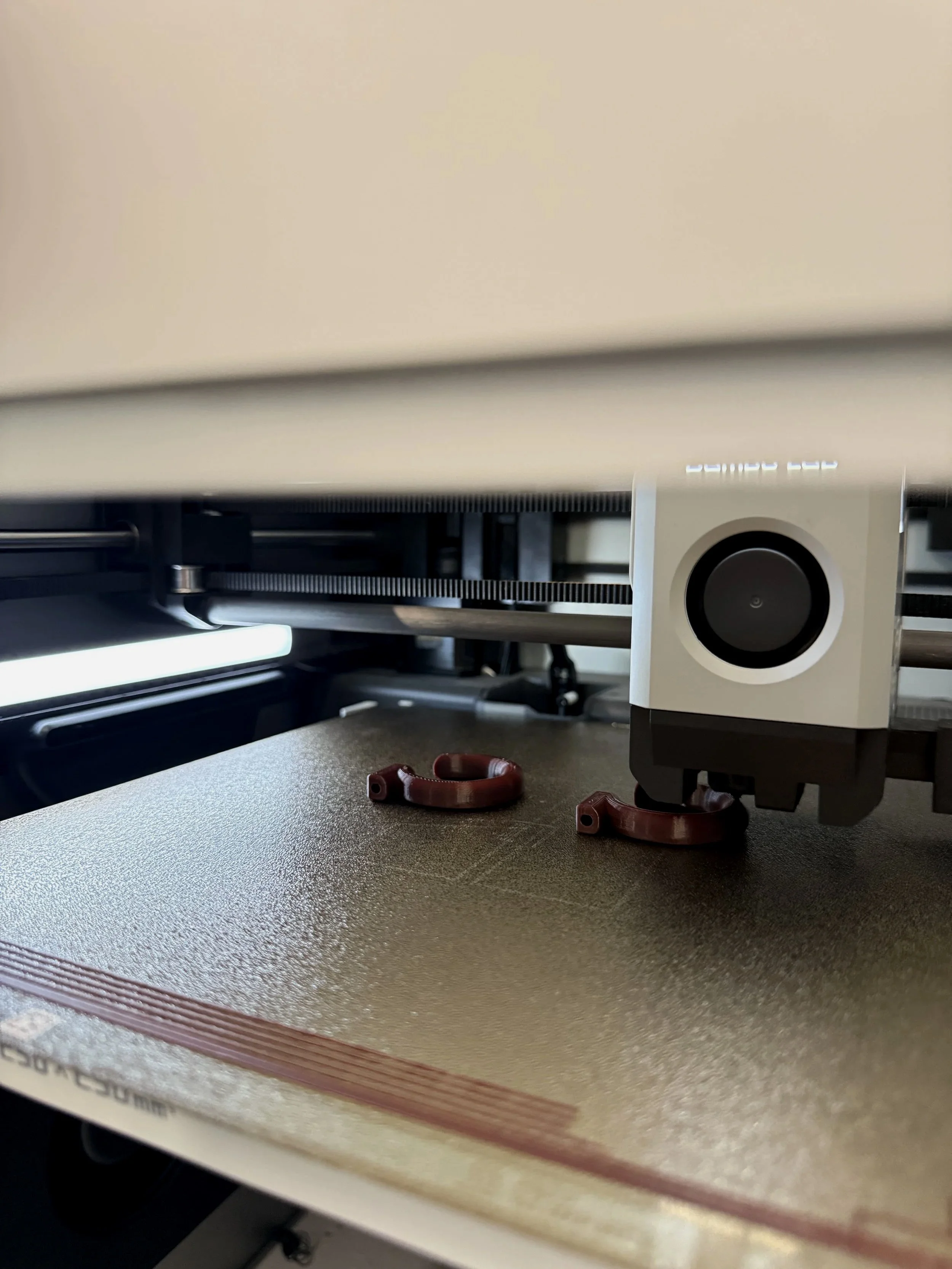
From drawing to prototype.
A new buckle being developed through 3D printing
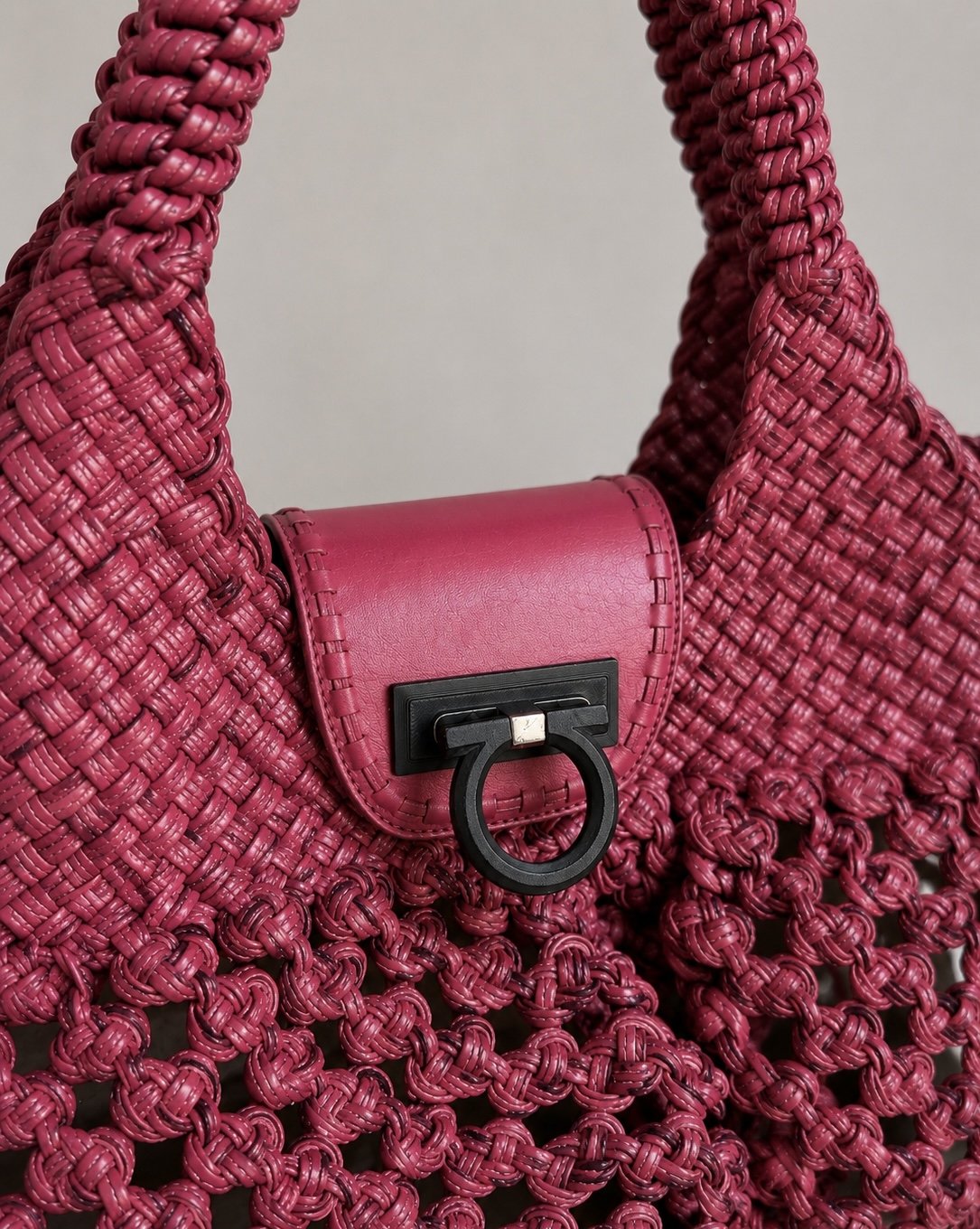
Back in Service.
The restored Ferragamo bag fitted with its new 3D-printed buckle
Following the Ferragamo experiment, I started to explore components commonly failed during everyday use.One component I have been thinking about is Gucci’s iconic bamboo handle. Gucci chose bamboo in 1947 because wartime shortage made leather and other materials difficult to source. It was an innovative material solution born from necessity. However, it is extremely fragile. The handles can crack or break from every use. I am wondering if a replacement has to be sourced anyways, could it be something preserving the spirit of the original while addressing one of its long-standing structural weaknesses? What if a broken bamboo handle didn’t have to be replaced with another piece of bamboo?
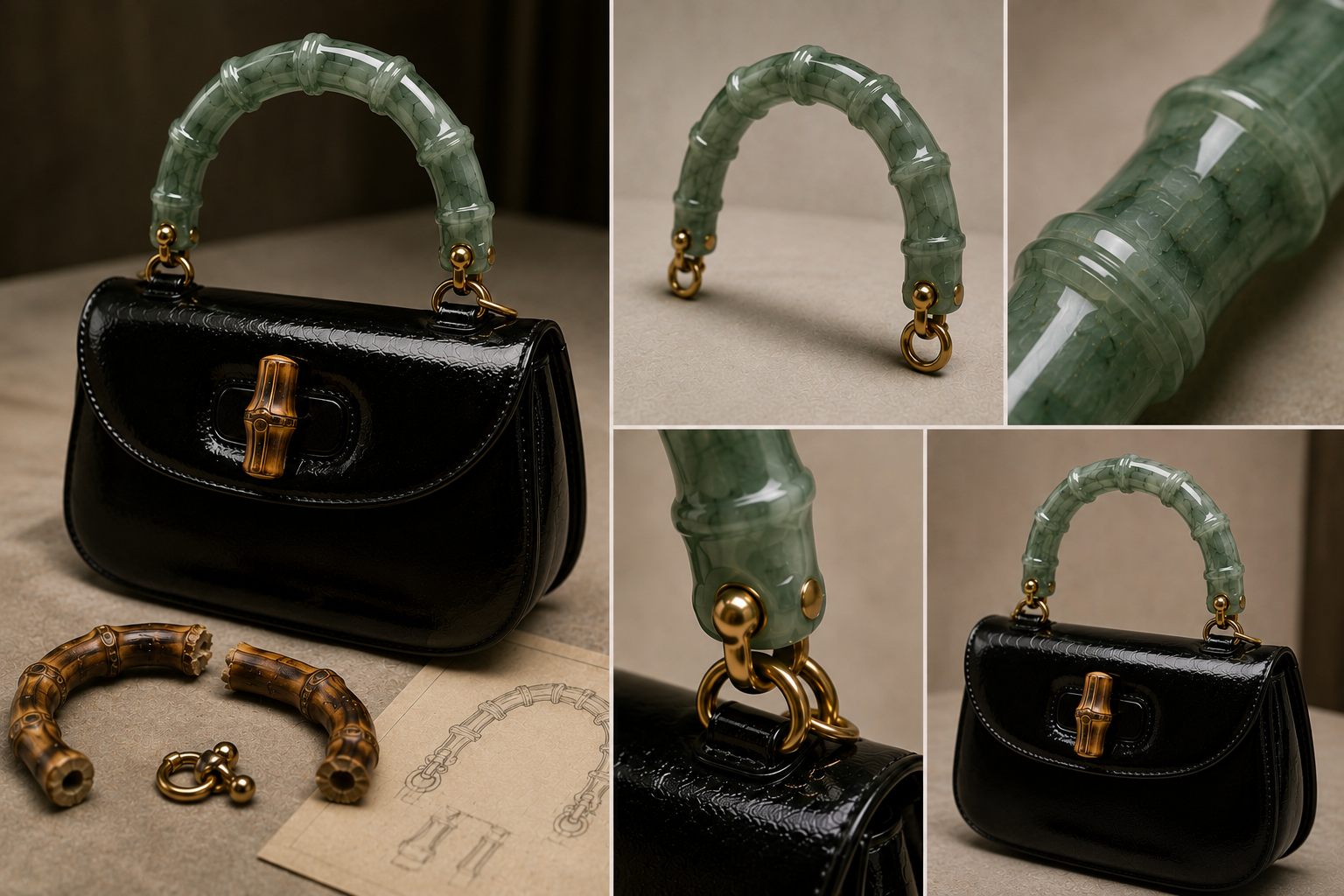
Design Concept.
Reimagining the Gucci Bamboo Handle in a translucent jade-inspired material through 3D printing
These ideas may take some time to become reality, but for me, they are innovation. I like to challenge the assumption that repair is only about restoring what once existed.
I believe every damaged object is a design problem waiting for its own solution and story to continue.